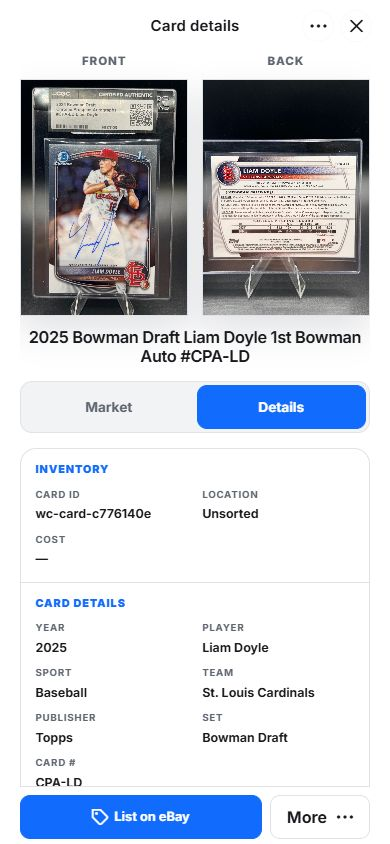
Know the value fields
- Wax Cache estimate: market estimate based on available market signals, including eBay-based comps where available.
- Manual price: override for insurance, sales, internal tracking, or stale estimate correction.
- Cost: what you paid for the card.
- Profit/loss: value or sale context compared with cost.
- Sold price: final sale amount when the card leaves active inventory or is tracked as sold.
Use values for workflow decisions
- 1
Open the card
CollectionCard rowReview identity, storage, photos, and value together. A value is only useful if it belongs to the right card.
- 2
Compare estimate and seller judgment
Wax Cache priceManual priceUse the estimate for triage, then use manual price when you know the specific condition, grade, comp, or desired selling price. Free includes 50 fresh price lookups per UTC calendar month; saved results and manual prices do not use a lookup.
- 3
Track cost and sale context
CostSoldCost and sold price make the record useful for profit/loss and seller reporting.
Do not treat estimates as guarantees
Card values move, and similar cards can differ by condition, grade, parallel, serial number, images, timing, marketplace, and buyer demand. Use estimates as workflow data, not a promise of sale price.
FAQ
Are Wax Cache estimates the same as sale prices?
No. Estimates are decision support based on available market signals. The actual sale price depends on card condition, grade, photos, marketplace, timing, and buyer demand.
Can I set my own card value?
Yes. Use manual price when you want seller judgment, insurance value, or a stable internal value to override the estimate.